Key takeaways
- Core and shell is a structure only; semi-finished adds the basics; fully finished is ready to move in apart from furniture and appliances.
- Finishing changes the price per m², so compare units with the same finishing.
- Ask for the finishing specification as a list attached to the contract.
Last reviewed 2026-10-27 · REONE editorial. General information, not legal, tax or investment advice.
The four levels
- Core and shell. The concrete structure, outer walls and roof, usually without plaster, plumbing or wiring inside. Common for villas and townhouses. You finish it your way, at your cost and time.
- Semi-finished. Plaster, basic plumbing and electrical wiring, sometimes the external windows. You still choose floors, bathrooms, kitchen and paint.
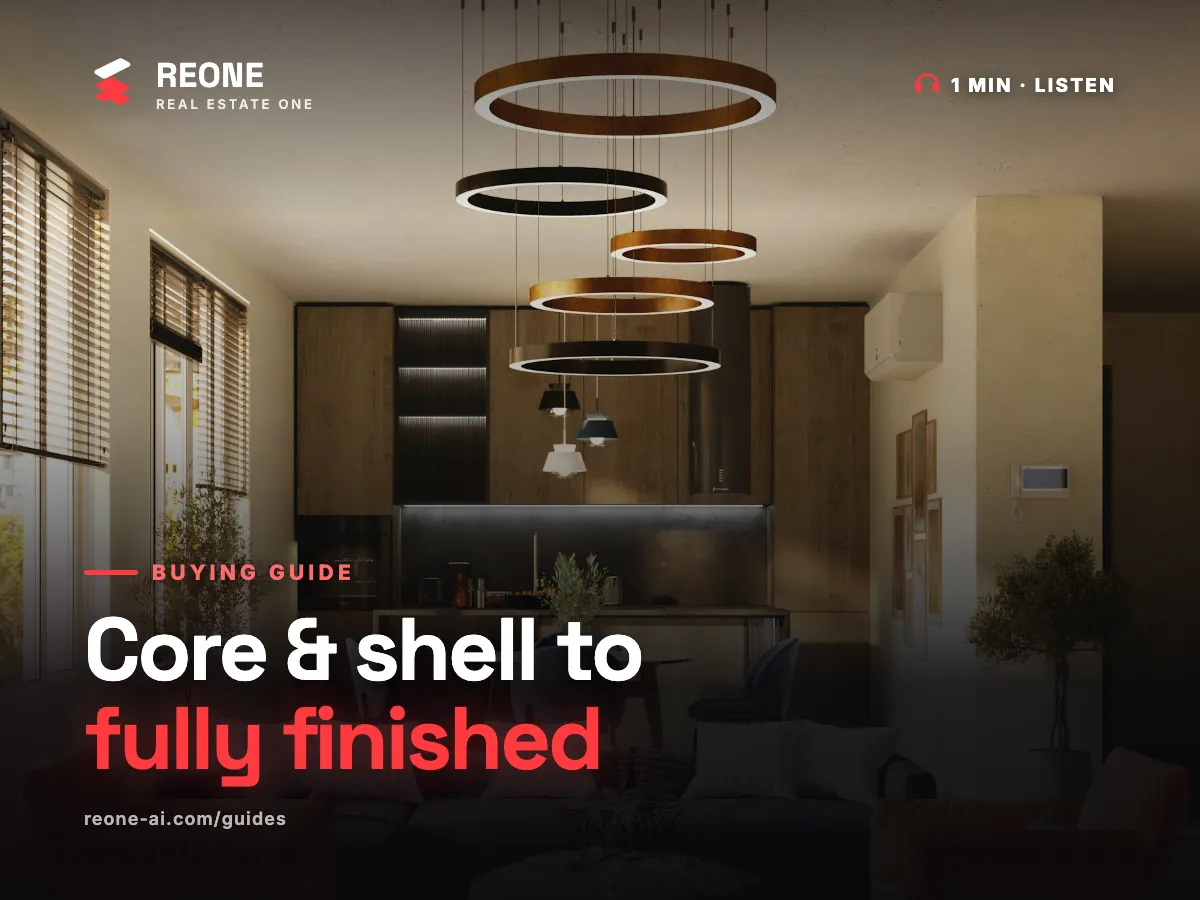
- Fully finished. Floors, walls, bathrooms and lighting done. Kitchen cabinets and air conditioning may or may not be included.
- Furnished or serviced. Fully finished plus furniture and appliances, more common on the coast and in serviced apartments.
How finishing changes the price
A fully finished unit includes work you would otherwise pay for, so its price per m² is usually higher than a core-and-shell one in the same compound. When you compare prices on REONE's area pages, compare like with like.
What to confirm in writing
- The exact finishing level, using the developer's own words.
- A specification list: floor material, bathroom fittings, kitchen, doors, windows and air conditioning.
- The delivery condition of the outside spaces: garden, roof or terrace.
- Who pays for meters and connections.
Frequently asked questions
Which finishing is best for rental?
Tenants usually want fully finished or furnished homes, so finishing costs come before rental income.
Is core and shell cheaper overall?
The asking price is lower, but add your finishing budget and the time it takes before you compare. See hidden costs.